
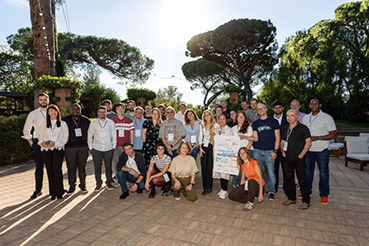
How can the cooperative movement contribute to building artificial intelligence that is more democratic, inclusive and oriented towards the common good? This was the central question addressed by the ‘Cooperative AI Bootcamp’, organised in Rome from 12 to 16 October by the International Cooperative Alliance, Legacoop and Fondazione PICO. The event brought together 30 representatives of the international cooperative movement from 18 countries to develop a roadmap towards Cooperative Artificial Intelligence (AI), drawing on cooperative identity and practices.
“We brought together cooperators from ICA member organisations and technology cooperatives to explore how cooperative AI could be developed in the future. In particular, we looked at how cooperative principles can be aligned with democratic ownership and participation. We are very happy to continue working on this in the future and to take all the outcomes of this Bootcamp with us, so that we can continue the excellent work we have started here”, said Marc Noël, ICA Director of Partnerships.
The event followed the launch of the Cooperative AI Programme at the ICA Global Conference, held in Panama last September. It was the first international bootcamp dedicated to exploring concrete ways of guiding the development and governance of artificial intelligence in line with cooperative identity.
This initiative is based on the conviction that the cooperative movement — representing 1 billion members worldwide — cannot simply adopt technologies developed by others, but can and must contribute to shaping their evolution, rules and impacts.
The first day focused on analysing the AI landscape, starting with a reflection on how cooperative identity can guide its development and governance. Participants explored the AI value chain: from raw materials to data centres, from algorithms to model training and, ultimately, to end users and the actors currently shaping AI development and governance.
Through discussions and working sessions, participants examined opportunities, challenges and possible cooperative responses. The day concluded with the development of an initial shared vision for Cooperative AI.
The second day focused on the first steps towards a strategy. Participants explored the role cooperatives can play in the future of AI, identified common themes emerging from their different perspectives, and worked on defining a transition pathway. This included identifying the key strategic milestones needed to make change possible.
The third day focused on taking this work forward beyond the bootcamp. Participants laid the foundations for a Community of Practice on Cooperative AI, defining its purpose, structure and ways of working, identifying the stakeholders to involve, and developing a shared roadmap based on concrete actions, roles and tools.
From analysing the current situation to defining a vision, and from that vision to a roadmap: the Cooperative AI Bootcamp was a space for collective work and reflection in which cooperators began to shape AI, its governance and its development around cooperative identity.