
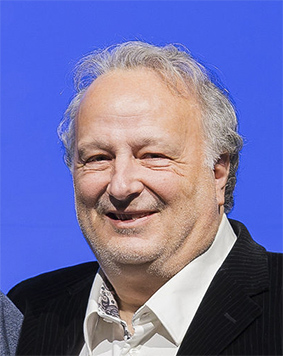
Marc Picard
President of CIRIEC International and CIRIEC Canada, and Chief Executive Officer of Caisse d’économie solidaire Desjardins
A few days after the 35th CIRIEC International Congress in Montreal, what I remember most are the people, the exchanges, and the remarkable diversity of knowledge and experiences shared.
We were more than 330 participants from 29 countries, with over 70 speakers. Beyond the numbers, I was impressed by the diversity of those gathered: researchers, leaders of public enterprises and social economy organizations, financial sector executives, trade union representatives, and public policymakers.
This plurality is one of CIRIEC’s greatest strengths. The chosen theme, “Caring for the World: The Essential Contribution of the Social Economy and Public Enterprises,” might have seemed utopian. In Montreal, it became very concrete: there is no doubt that we are already taking action.
Caring for the world means talking about the climate and the ecological transition, but also about people and the environments in which they live. The congress therefore addressed housing, inequalities, democracy, financing, work, culture, public infrastructure, and artificial intelligence.
This wide range of topics reminded us that major transformations are interconnected. It allowed us to appreciate the scale of the challenges, but also the dynamism and hope that inspire our community of shared values.
When Perspectives Meet
Several presentations illustrated the richness of the “CIRIEC formula.”
Julia Cagé, Professor of Economics at Sciences Po, powerfully connected economics, the media, inequalities, and democratic functioning. She showed how inseparable the quality of information and democratic vitality are.
Jérôme Dupras, Quebec’s Chief Scientist and a specialist in ecological economics, demonstrated how research can shed light on major collective choices. His career, which combines science and artistic creation, also illustrates the value of bringing different perspectives together.
Jimmy Jean, Chief Economist and Strategist at the Desjardins Group, presented an in-depth overview of the economic outlook. His presentation fostered a productive dialogue between different analytical frameworks and reminded us of the importance of listening to diverse scientific perspectives.
The roundtables extended these exchanges to topics including democratic governance, citizen participation, the role of public enterprises, social economy policies, housing, and living environments.
Together, we demonstrated that CIRIEC’s value lies as much in the connections we create as in the knowledge we produce and share.
An Essential Alliance Between Researchers and Practitioners
We need a strong alliance between research and practice in a world where disinformation is playing an increasingly prominent role.
The congress was designed around dialogues between the public and social economies, academics and practitioners, and experiences from Quebec and around the world. Quebec provides fertile ground for this kind of encounter. Its economic history is rooted in powerful collective institutions: cooperatives, mutual societies, trade unions, social economy enterprises, state-owned enterprises, workers’ funds, and cooperative financial institutions.
Our challenge is to build stronger connections between this experience and university research. Housing is a good example: it brings together researchers, municipalities, governments, community developers, cooperatives, and financial institutions.
The same applies to solidarity-based and sustainable financing: researchers document the models and their effects, while practitioners reveal the constraints that determine whether projects can be implemented in practice.
What the Montreal Congress Inspires Me to Do for CIRIEC International
I take on the presidency of CIRIEC International with humility and a strengthened conviction: CIRIEC must preserve scientific rigour at the heart of its identity while asserting more strongly its role as a meeting point between knowledge and action.
Its ability to connect experiences is invaluable. A solution developed in Montreal may be relevant to Barcelona, Bogotá, or Brussels; a European policy may prompt reflection in Quebec; and a Latin American cooperative innovation may renew our ways of doing things.
During my presidency, I want to encourage greater knowledge-sharing between countries, bring researchers and practitioners closer together, and turn CIRIEC’s work into drivers of action and influence.
Caisse’s Commitment to This Initiative
This ambition explains Caisse d’économie solidaire Desjardins’ commitment to CIRIEC. Far from being disconnected from our day-to-day work, this commitment extends our mission.
For many years, the Caisse has financed collective organizations and social economy enterprises. One practical question guides our daily work: how can we finance differently to make it possible to do business differently?
A financial institution specializing in the social economy cannot limit itself to financing transactions. It must contribute to the ecosystem, knowledge, and innovation that make projects possible and sustainable.
Participating in CIRIEC therefore means contributing, learning, and building connections: sharing our experience of financing Quebec’s social economy, discovering initiatives undertaken elsewhere, and bringing together those who think about transformation and those who make it happen.
The Real Day After Montreal
The congress sends a clear message: many of us share a transformative vision of the world. But the congress is not an end in itself. The work starts now: what will we do with all these encounters?
What collaborations will emerge? What research will be shaped by practitioners’ concerns? What experiences will circulate between countries? And which ideas will influence a public policy, an enterprise, or a community tomorrow?
In my welcoming speech, I put it simply: a conversation can spark an idea; that idea can inspire research; that research can lead to an innovation; and that innovation can improve the lives of our communities. After the congress, I believe this more than ever.
My ambition is to preserve the strength of our scientific roots while multiplying the spaces where knowledge meets experience, where Quebec meets the world, and where ideas meet action. I also want young people to take a full part in this dynamic.
Three years ago, the president of the Desjardins Group led an extensive consultation with Quebec’s youth about their vision of the future. The results of this initiative pleasantly surprised us all. The young people who took part highlighted cooperation as an innovative way of doing business and as an approach to prioritize in the fight against climate change. I saw this as confirmation of the relevance of the work we are pursuing. Collective entrepreneurship is not new, but it remains an innovative model that inspires the next generation. It is up to us to seize this opportunity and make room for young people in our discussions and work.
Caring for the world is not just about understanding it better. It is also about taking action to shape it in accordance with our values of social, economic, and environmental justice. This shared ambition is a powerful force for mobilization.