
French researcher Timothée Duverger has published his new book, “Changing the narrative to change the economy” (“Changer de récit pour changer l’économie”), in which he champions cooperatives, associations and mutual societies as key players in a democratic economic transformation centred on the common good. The book was published by the French publisher Les Petits Matins on 1 October 2026.
Head of the TerrESS Chair at Sciences Po Bordeaux, researcher at the Émile-Durkheim Centre and contributor to Alternatives économiques, Duverger develops in this essay a reflection based on his own columns on the Social and Solidarity Economy.
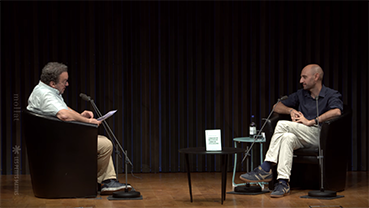
He presented the book in a conversation with journalist Jean Petaux, shared by the Mollat bookshop on 2 October. During the discussion, Duverger highlighted the need to reshape collective perceptions of the economy in order to recognise the contribution of cooperative, associative and mutual alternatives in building a different production model.
One of the book’s central arguments is that the Social and Solidarity Economy (SSE) is an established economic reality, yet its contribution remains underrepresented in dominant economic narratives.
Democratising businesses and protecting the commons
The book argues that the SSE should not be understood as a marginal sector, but as a force capable of transforming the economic model and helping to drive the major social and environmental transitions that are needed. This sector needs to renew its practices and strengthen its public recognition in order to establish itself as an economy of solutions serving the common good.
The topics addressed include business democratisation, collective action, territorial development and the protection of essential services from increasing commercialisation. The book places citizen participation and collective commitment at the heart of the efforts to drive lasting economic transformation.
The importance of this approach is also reflected in the scale of the SSE in France, where it accounts for more than 10% of employment, according to the figures cited by the author during the book presentation.
Duverger argues that transforming the economy also requires changing the narrative surrounding it, by raising the profile of initiatives that are already working, recognising alternative forms of ownership and management, and placing economic democracy at the centre of public debate.