The 19th edition of Social and Solidarity Economy (SSE) Month opened in Paris on 4 November with an event organised by ESS France, which brought together around 150 participants. The day addressed ecological, demographic and digital challenges and concluded with the presentation of the 2026 National SSE Award to the association Le Champ des Sourires.
Every November, France celebrates Social and Solidarity Economy (SSE) Month, an initiative that highlights the contribution of SSE organisations and enterprises to the country’s economic and social transformation. The opening of its 19th edition took place on 4 November at the new premises of ESS France, located at Wikivillage in Paris, where around 150 people gathered.
The event combined an exhibition space open to the public with three round tables dedicated to analysing the role of the social and solidarity economy in addressing the major transformations facing society: the ecological transition, demographic changes and digital transformation. The day concluded with the presentation of the 11th 2026 National SSE Award and an address by Benoît Hamon, President of ESS France.
A space to showcase the social and solidarity economy in action
One of the main new features of this edition was the organisation of a genuine “SSE village”, designed to introduce the public to the initiatives and organisations working every day to build a fairer, more inclusive and sustainable economy.
The space, set up at Wikivillage — an innovation and entrepreneurship hub bringing together different social economy organisations and networks — hosted twelve organisations that presented their projects and activities through various stands. These included Don en Confiance, DUO for a JOB, Etamine, J’accueille, Jeunesse au Plein Air, La Beauté du Monde Inclusive, LAO, the French Committee of the IUCN, Le Rire Médecin, Où sont les dragons, Programme Marguerite and SINGA.
Le Champ des Sourires, winner of the 2026 National SSE Award
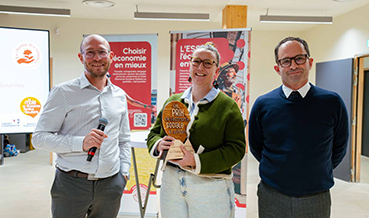
One of the key moments of the day was the presentation of the 11th 2026 National Social and Solidarity Economy Award, which recognised the work of the association Le Champ des Sourires, also the winner of the 2026 regional award from CRESS Bourgogne-Franche-Comté.
The organisation runs a social and labour market integration project aimed at women through an integration workshop linked to the production of locally grown flowers.
The initiative responds to a particularly significant reality: women account for only 30% of people participating in work integration programmes. To address the specific barriers they face — such as isolation, single parenthood, mobility difficulties, language barriers, health problems and loss of self-confidence — the project provides a working environment where they can develop skills, rebuild their confidence and progress towards sustainable employment.
In addition to its social and employment dimension, the initiative helps promote a more responsible local flower production chain, linking labour market inclusion with the ecological transition and local development.
“When the offer is equivalent, let’s choose SSE”
The event concluded with an address by Benoît Hamon, President of ESS France, who recalled the importance of the “ESS, l’économie en mieux” (SSE, a better kind of economy) label, launched in June 2026 to help consumers identify social and solidarity economy initiatives and choose them in their everyday lives. Hamon highlighted that the aim was for several thousand enterprises to be using this label before the end of November.
In this regard, he delivered a message to the social economy ecosystem itself: “When the offer is equivalent, let’s choose SSE”. This is a call for organisations in the sector to prioritise other social and solidarity economy organisations as suppliers, thereby strengthening their economic relationships, resilience and growth opportunities.
The President of ESS France also highlighted the growing success of SSE Month, which had already registered more than a thousand events across the country, despite the funding difficulties affecting areas such as the voluntary sector or social and labour market integration. Among the political advocacy priorities for the coming year, he highlighted the need to maintain European Social Fund (ESF) funding at European level and ensure that SSE remains present in the political debates of the upcoming presidential election year.
A month of activities across France
The opening event on 4 November marked the beginning of a full month of meetings, activities and celebrations in different parts of France. The calendar includes Solidarity Finance Week (9-15 November), the Festival of Solidarity (15 November-13 December), European Disability Employment Week (16-22 November), Digital in Common Day (20 November) and European Week for Waste Reduction (21-29 November).
The programme will culminate on 27 and 28 November in Dijon with the 11th Journées de l’économie autrement (Days for a Different Economy), organised by the magazine Alternatives économiques.