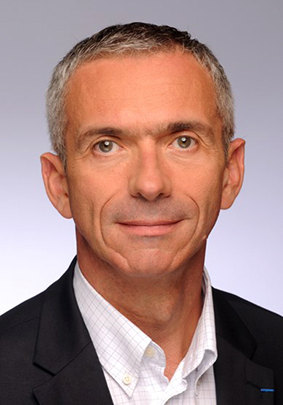
Yannick Lucas
President of the International Association of Mutual Benefit Societies (AIM)
In 1950, in the aftermath of a war that had plunged the world into mourning, mutualists from around the world founded the International Association of Mutual Benefit Societies (AIM). These men and women believed that the values they shared were stronger than history itself, and that mutual societies should speak with one voice in order to convey a message of solidarity on the international stage.
Seventy-five years later, in a world marked by ageing populations, the rising rates of chronic diseases, health crises, social inequalities and growing pressure on public finances, mutual societies continue to occupy a unique position. They are neither mere insurers nor mere administrative service providers. They are non-profit organisations founded on voluntary membership, solidarity among members, democratic governance and the pursuit of the common good. Their role therefore extends far beyond the reimbursement of healthcare costs: they contribute to building societies that are more protective, more equitable and more resilient.
Historically, mutuals were created through the determination of professional, territorial or social communities to organise collectively in the face of life’s risks: loss of income, illness, accidents, disability, dependency or death.
In the nineteenth century, even before the establishment of major public social security systems, they enabled workers, families and vulnerable groups to pool their resources in order to cope with expenses or income losses that would have been impossible to bear individually. At a time when the values of economic liberalism prevailed, men and women believed that the values of solidarity, democracy and non-profit making should take precedence whenever life’s uncertainties had to be faced.
Initially reluctant, public authorities subsequently encouraged the development of mutuals, whose principles were later incorporated into the establishment of compulsory social insurance systems.
This history explains their profound identity: a mutual society is founded on the idea that a risk borne collectively and in solidarity becomes more manageable for everyone.
From the 19th to the 21st century, the values have remained unchanged
Today, mutuals operate in very different contexts depending on the country, but their values have remained the same.
In some European countries (Germany, Belgium, the Netherlands and France), they have been entrusted with the management of all or part of the compulsory social security scheme. In other health systems, mutuals complement public social security schemes by covering part of the healthcare expenditure not reimbursed by statutory health insurance.
In other regions, including Africa, the Middle East, Latin America and Asia, health mutuals or community-based insurance schemes contribute to the gradual extension of social protection to private-sector employees and civil servants, as well as to people who remain beyond the reach of public schemes: informal workers, rural workers, self-employed, women, young people and people living in underserved areas. Their contribution may be complementary, substitutive, experimental or integrated into national universal health coverage policies.
In these regions, contrary to what was once believed, mutuals cannot by themselves build a social protection system. They require the support—including financial support—from the State, employers and local authorities. They can, however, be a powerful ally in the implementation of universal health coverage by adapting to the needs of protected persons and ensuring administrative management that remains close to local realities in contexts where administrative infrastructures are sometimes inadequate.
The first contribution of mutuals is financial. By organising the pooling of members’ contributions, they make it possible to distribute costs among healthy and sick people, young and old, people with different income levels, and territories that are more or less exposed to risk. This solidarity is the fundamental principle of any effective social protection system: it prevents illness from becoming an economic disaster for households. When high healthcare expenditure arises, the protected person does not face the cost alone; instead, they benefit from a collective mechanism that makes access to healthcare more predictable and more affordable.
In many countries, mutual societies also manage social and health services, thereby enabling their members to access high-quality care at affordable costs.
Lastly, mutuals constitute a social movement. In a world that has lost its bearings, mutualists remain convinced that the values they share within AIM are more relevant than ever. They believe that the values of solidarity should govern the functioning of our healthcare systems more than the pursuit of profit, and that the values of humanism and democracy should serve as guiding principles both within and outside our organisations.
There is still much to be done
All over the world, women and men remain excluded from any form of social protection while, at the same time, the world’s richest man has a fortune that would rank him 35th in the ranking of countries by annual GDP, ahead of Switzerland and Belgium. The principles of an unconstrained liberalism, such as those advocated in the nineteenth century, are once again prevailing, and inequalities have never been so great.
The world needs mutuals. Yet, in many countries, their legal status is being called into question on the basis of a legal isomorphism that refuse to recognise the fundamental difference between risk-based pricing based on individual risk, as practised by for-profit insurers, and mutual solidarity mechanisms, in which risk is shared equitably by all.
Wherever they exist, we must therefore strengthen the legal status granted to mutuals to prevent any form of trivialisation. In countries where they do not yet exist, legal frameworks must be established to enable the establishment of mutuals under conditions that guarantee both their operational independence and the protection of their members.
This is the role that AIM has played for over eighty years, and will continue to play, in relation to governments, European institutions and international organisations.
AIM is also the place where mutuals come together, exchange experiences and pool the expertise of their specialists for the benefit of all.
We are convinced that, in the face of the challenges posed by the major demographic, climate and technological transitions, mutuals remain a force for empowerment, enabling their members to play an active role in shaping their own social protection.