The 3rd Civil Society Week (2026), organised by the European Economic and Social Committee (EESC), once again established itself as the largest annual gathering of civil society in the European Union, bringing together around 1,000 participants and more than 90 speakers across 19 working sessions from 2 to 5 March in Brussels. Under the theme “People, Democracy, Resilience – Our Future!”, the event also highlighted the essential role of the social economy as a key actor in strengthening democracy and social cohesion in Europe.
This year’s edition took place in a context marked by increasing pressure on democratic values, both globally and within the EU itself. In this context, the involvement of civil society — and especially the social economy — was identified as crucial to strengthening resilience and citizen participation.
The EESC highlights the importance of dialogue and European values
During the presentation of the Week’s conclusions, EESC President Séamus Boland stressed the importance of dialogue and shared values: “We cannot succeed as a Union if we do not continue to uphold values such as peace, inclusion and resilience.”
For his part, the European Commissioner for Democracy, Justice, the Rule of Law and Consumer Protection, Michael McGrath, underlined the importance of education, citizen engagement and media and digital literacy as key pillars for building resilient societies. These priorities are aligned with the so-called “European Democracy Shield”, a key initiative within the future EU civil society strategy.
Meanwhile, the Vice-President of the European Parliament, Nicolae Ștefănuță, highlighted one of the main challenges facing the sector: funding, “the number one problem for civil society”, and called for increased budgetary support to enable these organisations to fully play their role.
Towards a European Civil Society Platform
One of the main outcomes of the Week was the momentum given to the future EU Civil Society Platform, whose steering group held its first meeting. The EESC will play a central role in its development alongside institutions such as the European Commission and representative organisations.
The social economy at the heart of the debates
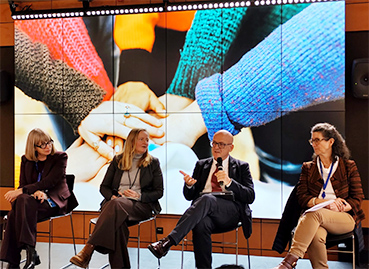
The participation of the social economy, through its leading representative organisation, Social Economy Europe (SEE), highlighted its strategic role in building stronger and more cohesive societies. The organisation took part in three key sessions focusing on digital resilience, democracy and the role of volunteering.
The Director of Social Economy Europe, Sarah de Heusch, stated that “the resilience of the social economy is in its DNA”, underlining its closeness to communities and its capacity to identify social needs.
She also warned about the need for greater institutional and financial support, particularly in the context of negotiations on the next EU multiannual financial framework.
In the same vein, the Vice-President of the EESC Group III, Ariane Rodert, stressed the role of civil society organisations and social economy actors in building trust and social cohesion, essential elements for responding to crises.
A key actor for Europe’s democratic future
The conclusions of the Civil Society Week also point to the need to strengthen civic education, social cohesion, access to affordable housing and support for civil society and the social economy. They also underline the importance of expanding participatory democracy tools, such as the European Citizens’ Initiative.
In a context of global challenges and profound transformations, the social economy reaffirms its role as an essential actor in ensuring inclusive, resilient and democratic societies. Its role, closely linked to communities and citizen participation, places it at the heart of current and future European policies.