
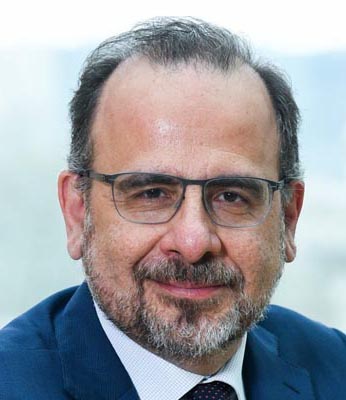
By Luca Jahier, EESC Rapporteur of next 2028-2034 MFF and Past EESC president, 2018-2020
The debate on the EU next Multiannual Financial Framework (MFF) for 2028-2034 has begun at a decisive moment for Europe. Faced with geopolitical instability, ecological transition, social fragmentation and widening territorial disparities, the Union must equip itself with a budget capable not only of responding to crises but of shaping a sustainable and inclusive future. The recent opinion adopted on last January 22 by the European Economic and Social Committee (EESC) on the next MFF represents a significant contribution to this debate and the first official position on all EU Institutions, calling for greater ambition, structural reform and also a stronger recognition of the social economy as a key actor in Europe’s development.
A more ambitious and coherent EU budget
In its opinion, the EESC highlights a fundamental contradiction: the EU is expected to deliver on increasingly complex political priorities—from defence and competitiveness to climate neutrality and social cohesion—yet its financial resources remain constrained and fragmented. The Committee therefore calls for a more ambitious MFF, capable of matching the Union’s strategic objectives with adequate financial means.
This implies not only increasing the overall size of the EU budget, also recurring to new dedicated common debt instruments for financing European strategic common goods as strengthening its own resources. Without these, the Union risks being trapped in a cycle of limited ambition and reactive policy-making. The EESC advocates a reform of the own-resources system, including new sources linked to environmental and digital transitions, to ensure greater financial autonomy and predictability.
At the same time, the Committee stresses the need for coherence and transparency. The experience of recent years—particularly with the creation of large ad hoc instruments such as NextGenerationEU—has demonstrated the EU’s capacity for innovation but also revealed the risks of excessive complexity and fragmentation. The EESC therefore calls for a structural revision of the current “Mega fund” architecture (the so-called Heading 1) to ensure that future financial instruments are better integrated into the MFF framework, easier to access and more aligned with long-term policy goals.
Preserving cohesion and traditional policies
While advocating reform, the EESC strongly defends the continued centrality of cohesion policy and the Common Agricultural Policy (CAP) within the next MFF. These policies have played a crucial role in reducing regional disparities, supporting rural communities and strengthening the social and territorial fabric of the Union. Their preservation and adequate funding are essential to maintaining citizens’ trust and ensuring that the green and digital transitions do not leave territories or communities behind.
The European Social Fund Plus (ESF+) also should be preserved as a cornerstone of the future budget. As the main EU instrument for investing in people—through employment, skills, social inclusion and poverty reduction—ESF+ has proven indispensable for promoting social cohesion and resilience. The EESC underlines that reinforcing ESF+ is not only a social imperative but also an economic one, as Europe’s competitiveness increasingly depends on human capital, quality employment and inclusive growth.
Recognising the strategic role of the social economy
Within this broader framework, the EESC continue to place particular emphasis on the role of the social economy. Cooperatives, mutual societies, associations, foundations and social enterprises constitute a vital component of Europe’s economic and social model. They generate employment, foster innovation, strengthen local communities and provide essential services, often in areas where traditional market actors are absent.
Over the past year, the European social economy and cooperativism have called for stronger recognition within the next MFF. The EESC aligns itself with these demands, stressing that the social economy should not be treated as a marginal or residual sector but as a strategic partner in achieving EU objectives. From the green transition to digital inclusion, from social innovation to territorial cohesion, social economy actors are uniquely positioned to deliver solutions that combine economic efficiency with social value.
To fully harness this potential, the next MFF must ensure dedicated and accessible funding streams for the social economy. This includes maintaining and strengthening programmes such as ESF+, InvestEU and cohesion funds, while also improving synergies between them. Simplified procedures, tailored financial instruments and capacity-building measures are essential to enable social economy organisations—often smaller and locally rooted—to access EU funding effectively. But for sure, as the general structure of next MFF is expected to change radically, following a scheme of negotiated national plans and a logic of performance-based budget, SEE should also be prepared to navigate in this new era.
Towards a participatory and values-driven MFF
Beyond financial allocations, the EESC calls for a more participatory approach to the design and implementation of the next MFF. Civil society organisations, including social economy actors, must be involved not only as beneficiaries but also as partners in shaping priorities and monitoring outcomes. Such participation enhances democratic legitimacy, improves policy effectiveness and ensures that EU funding responds to real needs on the ground.
This approach is particularly important in a context where the EU seeks to reaffirm its social and democratic foundations. The social economy embodies values—solidarity, participation, sustainability and inclusion—that are at the heart of the European project. Integrating these values more systematically into the EU budget can help bridge the gap between European institutions and citizens, demonstrating the tangible benefits of European cooperation.
From ambition to implementation
The EESC opinion on the MFF 2028-2034 offers a clear message: Europe needs a budget that matches its ambitions and reflects its values. This means increasing financial resources, simplifying structures, preserving cohesion policies and placing the social economy at the centre of Europe’s development strategy.
As negotiations on the next MFF gather pace, the challenge will be to translate these principles into concrete decisions. Social economy actors have to be active in these complex negotiations between co-legislators, as a driver of innovation, resilience and cohesion.
In this sense, the next MFF is more than a financial framework; it is a political and societal choice. By embracing the recommendations of the EESC and the aspirations of the European social economy, the EU can seize this opportunity to reaffirm its commitment to a model of development that places people, communities and solidarity at its core.